CityPlanningNews.com

AIA Chicago Firm of the Year!

Congratulations.  Well done.

AIA Chicago Firm of the Year!

The American Institute of Architects (AIA) Chicago Chapter has awarded Farr Associates its highest honor. The Firm of the Year Award recognizes the outstanding collective achievements by a firm and overall excellence in its body of work. It honors outstanding contributions made in the areas of design, research, planning, technology, and architectural practice. The award also acknowledges the distinctive characteristics or personality of the firm and its operations, this year, citing Farr Associates' culture of connecting architecture with urban planning.Farr Associates was selected based on the "firm's committment to sustainability far surpassing industry norms and an impressive optimism of the future of our cities. Seven LEED Platinum projects, two net-zero projects, and numerous publications on the subject of Sustainable Urbanism clearly show that Farr Associates is advancing the profession."

Doug Farr, founding principal, responded, "We are honored by this recognition of our firm’s integration of planning and architecture, our leadership in advancing sustainable design at all scales, and our dedication to promoting Sustainable Urbanism around the world. We sincerely thank our client and collaborator partners who help us realize our dream of making future-minded places and buildings increasingly routine."


Net-Zero No-Kill Cat Shelter Earns LEED Platinum


Farr Associates' design for Harmony House for Cats is the Midwest's most sustainable cageless, no-kill animal shelter, earning LEED-NC v3.0 Platinum this month. Located in Chicago, the 7,100 square foot project is the City's first design for a net-zero energy commercial building and features a 30KW photovoltaic system, and 20 solar hot water panels that not only provide hot water for the shelter's cleaning needs, but also augment the 14-well geothermal system by charging the ground with excess heat during summer months. The courtyard design creates a beautiful daylit solution, reducing energy bills, and gives shelter inhabitants (150 cats) and volunteers (numerous humans) a gorgeous view to the landscaping--and passersby an immediate view of adoptable cats and kittens.

Harper Court Achieves LEED-ND Gold


Harper Court, a new mixed-use development initiated to replace an urban-renewal-era shopping center in Chicago's Hyde Park neighborhood, has earned a LEED for Neighborhood Development (ND) Gold rating from the USGBC, an Illinois first. Farr Associates led the project's LEED-ND certification and served as the project's master plan and urban design consultant in collaboration with Hartshorne Plunkard Architecture. The master plan described a vibrant urban place with mixed used-buildings defining a first-of-its-kind multi-purpose street. Developed through a partnership among Harper Court Partners, LLC, the City of Chicago and the University of Chicago, at full buildout Harper Court will provide 1.1 million square feet of new mixed-use space on ±3.96 acres, including 250,000 square feet of commercial uses, a new hotel, and up to 425 residential units. The LEED-ND certification recognizes the inherent sustainability of mixed-use transit-served urban development, enhanced with green infrastructure and buildings. 

Municipalities Adopt Sustainable Codes

Increasingly municipalities are implementing sustainability plans by adopting sustainable subdivision, zoning and building codes. Here are three recently adopted codes prepared by Farr:

Dublin, Ohio adopted the Bridge Street Corridor Development Code. An outcome of a larger master planning process for the area, this form-based code was developed with the goal of creating a vibrant, walkable environment with a dynamic mix of land uses and housing types within the 800-acre district.

Billings, Montana adopted the East Billings Urban Revitalization District Code. This form-based code will guide the sustainable redevelopment of the area into a walkable, flexible light industrial and mixed-use area.

Aurora, Illinois adopted an alternative energy ordinance that establishes requirements and streamlines the process for property owners installing solar and wind energy systems within the city.


SynergiCity


With a particular emphasis on the Rust Belt of the American Midwest, SynergiCity argues that cities such as Detroit, St. Louis, and Peoria must redefine themselves to be globally competitive. This revitalization is possible through environmentally and economically sustainable restoration of industrial areas and warehouse districts for commercial, research, light industrial, and residential uses. The volume's expert researchers, urban planners, and architects draw on the redevelopment successes of other major cities--such as the American Tobacco District in Durham, North Carolina, and the Milwaukee River Greenway--to set guidelines and goals for reinventing and revitalizing the postindustrial landscape.

Contributors are Paul J. Armstrong, Donald K. Carter, Lynne M. Dearborn, Norman W. Garrick, Mark L. Gillem, Robert Greenstreet, Craig Harlan Hullinger, Paul Hardin Kapp, Ray Lees, Emil Malizia, John O. Norquist, Christine Scott Thomson, and James H. Wasley.

"Instead of handing over neighborhoods to city hall or private developers, this book shows that the solution to many cities' plights lies within them. Empowering residents to take control of and build on community assets, engaging them in community-based organizations that can spearhead revitalization and build real quality of place, yields real results. To the extent that they adopt a holistic approach to planning and build on a city's intrinsic strengths, they can accomplish miracles."--from the foreword by Richard Florida
Hardcover $60.00 Buy Now

* Full Disclosure - Ray Lees and I wrote a chapter.


Transparency


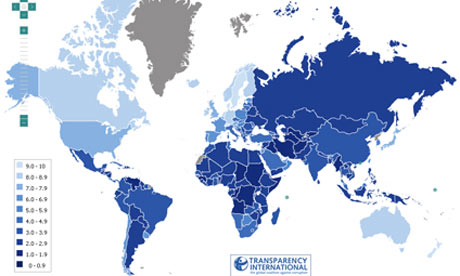
The map a above shows nations by transparency. The lighter the color the better.

"Transparency, as used in scienceengineeringbusiness, the humanities and in a social context more generally, implies openness, communication, and accountability."

Click to read more

Note that the most successful countries are also the most transparent. 


Green Sculpture Park


“GREEN” SCULPTURE PARK - PEORIA, ILLINOIS

The City of Peoria has many quality sculptures. The City is also leading the expansion of “Green” Technology and Sustainability. A Green Sculpture Park could be developed that would be artistic and “green”, incorporating recycled materials, wind and solar energy, etc. into the design. 


A program modeled on the successful Sioux Falls, South Dakota program could be created.
www.sculpturewalksiouxfalls.com . Each year new sculptures are displayed in downtown for one year, and become a tourist attraction. After one year the sculptures are replaced by new sculptures. The sculptures are for sale and people vote for their favorite.

The Civic Center could sponsor this event, with sculptures mounted in Civic Center green space. As the event grew it could cascade down Fulton and on to the Build the Block Campus.http://buildtheblock.com

The sculptures would be a major tourist attraction.


The Green Sculpture Park Could start small on the green space at the Civic Center, then expand down Fulton Street to Build the Block and the River.

New Posts


Most of my new posts will be made to 

Manufacturing Matters


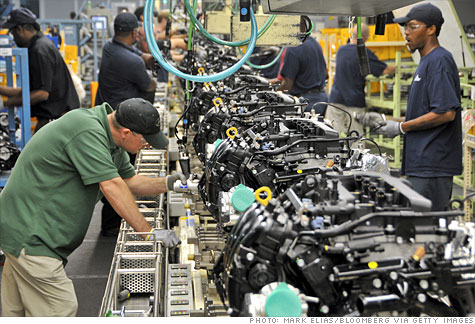
Excellent article about how "Manufacturing matters by Professor Laura D’Andrea TysonManufacturing is very important to our economy.  Our success in finance and technology is our strong suit as a nation, but we need all parts of our economy functioning well for success. A part of a good and improving society is a job for all our citizens.  We need jobs that fit the ability of all our people.


http://economix.blogs.nytimes.com/2012/02/10/why-manufacturing-still-matters/ 


The Beige Book


What is the Beige Book?


The “Summary of Commentary on Current Economic Conditions by Federal Reserve District,” report commonly known as the Beige Book, is published eight times per year. Each Federal Reserve Bank gathers anecdotal information on current economic conditions in its District through reports from Bank and Branch directors and interviews with key business contacts, economists, market experts, and other sources. The Beige Book summarizes this information by District and sector. An overall summary of the twelve district reports is prepared by a designated Federal Reserve Bank on a rotating basis.

Click to Read


http://www.federalreserve.gov/FOMC/BeigeBook/2011/20111130/default.htm


http://www.economicdevelopmentnews.com/


Peoria Next

Peoria NEXT is an organization of The Heartland Partnership that aims to facilitate Discovery, Innovation and Commercialization of new technologies through collaboration and creativity for economic development. The organization turned 10 years old on September 11, 2011 and has grown tremendously since its inception. Peoria NEXT named it's new CEO, Grant Brewen, in November 2011 and looks forward to conitnued growth in the technology commercialization arena.


Iowa Economic Development Authority


The newly formed Iowa Economic Development Authority (formerly IDED) will use the best aspects of the public and private sectors to create a dynamic, results-driven partnership with programs and incentives that will meet the needs for business growth. 

This model marks a new direction in economic development for the state and consists of two arms – the Iowa Economic Development Authority and the Iowa Innovation Corporation.

The authority is a quasi-government agency that replaces the existing Iowa Department of Economic Development and will perform its current duties. The authority will have a more focused set of incentives, providing maximum flexibility to meet the needs of potential employers.

The second entity, the Iowa Innovation Corporation, will serve as the private sector side of the economic development equation and will work to attract investors and investment capital. A non-profit, the IIC will solicit funds for various sources in the private sector to be used for its job creation efforts.

Iowa has set bold economic development goals for the coming years: Create 200,000 private-sector jobs and raise family incomes by 25 percent. This new approach to economic development will focus on innovation and growing high-paying jobs that will support Iowa’s future.

Advanced Manufacturing On The Rise

One key economic cluster that will help the state reach these goals is the advanced manufacturing industry.  Newly released numbers by the Battelle Memorial Institute, reveal that advanced manufacturing employs 13 percent of all Iowa private-sector jobs. It also accounts for 33 percent of Iowa’s private-sector economic output and generates 78 percent of its patents. During 2009, advanced manufacturing employed around 156,000 people.

The report also identified biosciences and information technology as key areas for the state.  

Included below are some additional data points from the report:

  • Iowa's advanced manufacturing sector remains diverse, and not overly dependent on any one sector for its economic fortunes. Containing 18 subsectors, the advanced manufacturing sector in Iowa demonstrates regional specialization in fully 14 of these.

  • During the recession, Iowa's advanced manufacturing sector shed 11% of its jobs; somewhat less than the national sector which dropped by nearly 12%.

  • Average wages for the state's advanced manufacturing sector and all of its major subsectors are greater than those for the average private sector worker. The average wage is $50,669 which is 40% higher or more than $14,000 greater per year.  Among the major subsectors, aerospace has the highest average wages at $71,313 per year.

  • The expanding biobased products sector and the need to find biobased alternatives to foreign energy imports is a good subsector in which to leverage strengths and holds promise for future employment growth.

  • The "emerging potential" subclusters, that are gaining employment but have not yet reached regionally-specialized levels include "research, engineering and industrial design services" and "human biosciences"—areas that are actually supported by the other Iowa clusters of IT and bioscience.

Thanks and best,

Juan Niño
Burson – Marsteller

Economic Development Incentives


Summary of Economic Development Incentive Programs in Illinois


The following information is a cursory view of Economic Development Incentives that are available to municipalities in the State of Illinois. All incentives are, foremost, at the discretion of the municipality. Municipalities should have policies in place that describe when and under what circumstances they will award incentives. Incentives should always be granted for the public good and should only be granted to make the project work. Communities should assure that, “but for” the incentive the project is not financially possible. Many times this will mean that the community reviews the pro forma of the developer to determine the level of the incentive. The community should evaluate the amount of the incentive in proportion to the financial risk of the developer.

Tax Increment Financing—65ILCS, 5/11-74.4.1 et.seq.


TIF is perhaps the best-known incentive available to communities in Illinois. When a community institutes a TIF district it freezes the existing Equalized Assessed Valuation for all taxing districts for the next twenty-three years or until the TIF dissolved. Any increase in the EAV and its resulting property tax are applied toward development of the district.

Communities can use the increment to support a myriad of economic development activities; the most common is for the development of infrastructure. In addition, TIF can write down the purchase of the land, pay for preparation of the land (including grading for drainage and demolition), and pay for the following and other costs: partial interest costs, rehabilitiaion and lease hold improvement costs, relocation costs, and landscaping, etc.

Business District—65-ILCS 5/11-74.3-1

A Business District can be established for a particular site or series of parcels. The municipality then implements an additional sales or hotel motel tax to a maximum of 1%. The proceeds from this new sales tax are applied to costs of the development of the site. Eligible costs are similar to that of TIF.

Sales Tax Revenue Sharing

Municipalities may enter into agreement to share or rebate any portion of any retailer’s occupation tax that is generated by the development for a finite period of years. The municipality must make findings related to the property and in general the abatement should serve a public purpose as creating development in adjacent areas or creating or retaining jobs, enhancing the tax base of the municipality.

Property Tax Abatement--35ILCS 200/18-165

The community can provide a maximum of $4 million dollars in tax property tax abatement within a ten-year period for commercial and industrial development. The municipality may be joined by other taxing bodies in providing this abatement. Normally there is an agreement based on all or part of the property taxes being rebated over a number of years.

Special Services Area or Special Assessment

An area is created where a special assessment is placed against property to finance certain public improvements or services. This incentive has become popular in recent years to incent the development of housing. In this case the developer requests that public infrastructure (in the past, mostly financed by the developer) be financed by the community. The community publicly finances this infrastructure at a tax-exempt rate and applies an assessment to the property. These bonds incent development by removing the costs of infrastructure.


Enterprise Zones

The Illinois Enterprise Zone Act creates a specific area jointly designated by the State and local government that allows various tax incentives and other benefits to stimulate economic activity and neighborhood revitalization.

The following are among the incentives that are available in an enterprise zone: Investment Tax Credit, construction material sales tax deduction, machinery and equipment sales tax exemption, utility tax exemption, jobs tax credit, tax abatement income tax deduction for financial institutions on loans for development in enterprise zone, corporate contribution deduction.

Revolving Loan Fund

The municipality subsidizes private loans through a revolving loan fund.

General Municipal Assistance

The municipality may provide a number of incentives for economic development in the general course of doing business. They may reduce or eliminate fees that apply toward development. They may work with the developer to minimize the time taken to process development.

State Incentives


Both the State and Urban Counties provide for Community Development Block Grant Funds or the CDAP program for the State. (See the Department of Commerce and Community Affairs Web site)

The Department of Commerce and Economic Opportunity administers the EDGE Tax to reduce the cost of doing business in Illinois when compared with similar costs in other states allowing for tax credits.

The Environmental Protection State has a Brownfield clean up program that offers a variety of incentives.

The Illinois Department of Transportation is administers funds for roads to support economic development.

The Illinois Development Finance Authority provides Industrial Revenue Bonds.

The State of Illinois Web site provides access to all departments and their programs.

Typical Low Interest Loan Programs

Industrial Revenue Bonds

Very large loans (must be greater that $1.5M) for significant manufacturing and industrial projects, used to acquire fixed assets. Can be issued by the City of Peoria. Can finance up to 100% of the total project costs at below-prime rates (fixed or variable terms). Call the City of Peoria's Department of Economic Development at (309) 494-8640 or get more info at www.il-fa.com/products/ind_irb.html


Illinois Department of Commerce and Economic Opportunity

Enterprise Zone Participation Loan


Works much like the IFA's Participation Loan, but is limited to businesses expanding or locating in an Enterprise Zone. Funds can be used for purchase and installation of machinery and equipment, working capital, purchase of land, construction or renovation of buildings. Cannot be used for debt refinancing or contingency. For DCEO's portion of the loan, the interest rate on variable-rate loans is 2% below indexed rate. Fixed and adjustable rates are similar to US Treasury notes, plus 0-1%. Borrower cannot employ more than 500 FTEs. More info:www.illinoisbiz.biz/dceo/Bureaus/Business_Development/Loan+Programs/ezp-plp.htm.


Revolving Line of Credit


Allows businesses to borrow the amount of money needed to meet the demand and to repay the loan from the sales revenues. Line of credit established for between $10K and $750K, but not more that 25% of total project. Attractive interest rates, but all review and terms set by lead lender. Must not employ more than 500 FTEs. Three year maximum term. More info:www.illinoisbiz.biz/dceo/Bureaus/Business_Development/Loan+Programs/rloc.htm .

Manufacturing Modernization Loan

Secondary financing of between $10K and $750K for manufacturers who are retooling, upgrading machinery, or expanding. Must constitute 25% or less of total financing package. Sub-prime rates, maximum term of 10 years. More info:www.illinoisbiz.biz/dceo/Bureaus/Business_Development/Loan+Programs/mmlp.htm


Illinois State Treasurer

State Treasurer's Economic Program

The Treasurer will deposit up to $25K into the business' bank at below market rates for each full-time employee created or retained. That bank, in turn, can lend those funds to the business at below prevailing rates for a term of between 1 and 5 years. More info:www.state.il.us/treas/Programs/step.htm


Economic Recovery Loan Program

Similar to the STEP program directly above, but the limit to be deposited is up to $50K per job created or retained. More info:www.state.il.us/treas/Programs/ER.htm


US Small Business Administration

SBA 504 Loan

Provides businesses with long-term, fixed-rate financing for major fixed assets, such as land and buildings, not to exceed 40% of total financing package. Requires 10% equity participation by business. For most businesses, the loan is $50,000 per job created, up to $1.5M. For "small manufacturers", the loan can be $100,000 per job created, up to $4M. Interest rate tied to 5- and 10-year US Treasury issues. Term is 10 or 20 years. More info: www.sba.gov/financing/sbaloan/cdc504.html.

7(a) Loan Loan guaranty for prime lender. All financing is handled through the lender, with partial guaranty by SBA in case of failure to pay. Applicants must meet certain qualification set out by SBA. Maximum loan is $2M (75% guaranty). Terms: maximum of 25 years for real estate and equipment, 7 years for working capital. Interest rates may be fixed or variable and may not exceed the prime rate by a certain number of points (depends on size and term). More info: www.sba.gov/financing/sbaloan/7a.html


Business Development Fund Secondary financing, not to exceed 33% of total financing package. Theremust be at least 10% equity participation from business. City will lend $10,000 per job created and/or retained, not to exceed $150,000. Fixed interest rate 4% below prime (but not lower than 4%). The term mirrors that of the primary lender.


More info: ci.peoria.il.us/services/depts/economicdev/2004%20BDF%20app.pdf

County G.A.P. Loans Secondary financing, not to exceed 40% of total financing package. There must be at least 10% equity participation from business. County will lend $10,000 per job created or retained, not to exceed $150,000. Fixed interest rate 3% below prime (not lower than 3%). Term will be one year for each $15,000 loaned (7 years maximum for loans for inventory and working capital).


Illinois Finance Authority Participation Loan  IFA will work with prime lender to purchase up to 50% ($1M max) of a loan for purchase of land or buildings, construction or renovation of buildings, and acquisition of machinery and equipment. Interest rate is 2% below the lender's rate, leading to a blended rate (lender may take up to 1% as servicing fee). 10 year maximum term (if lender term is longer, balloon payment required after 10 years). More info: www.ilfa.com/products/ind_part.html


Beth Ruyle is an Economic Development Consultant.

She can be contacted at

Bethruyle@gmail.com

309 966-1616